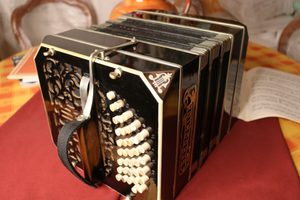
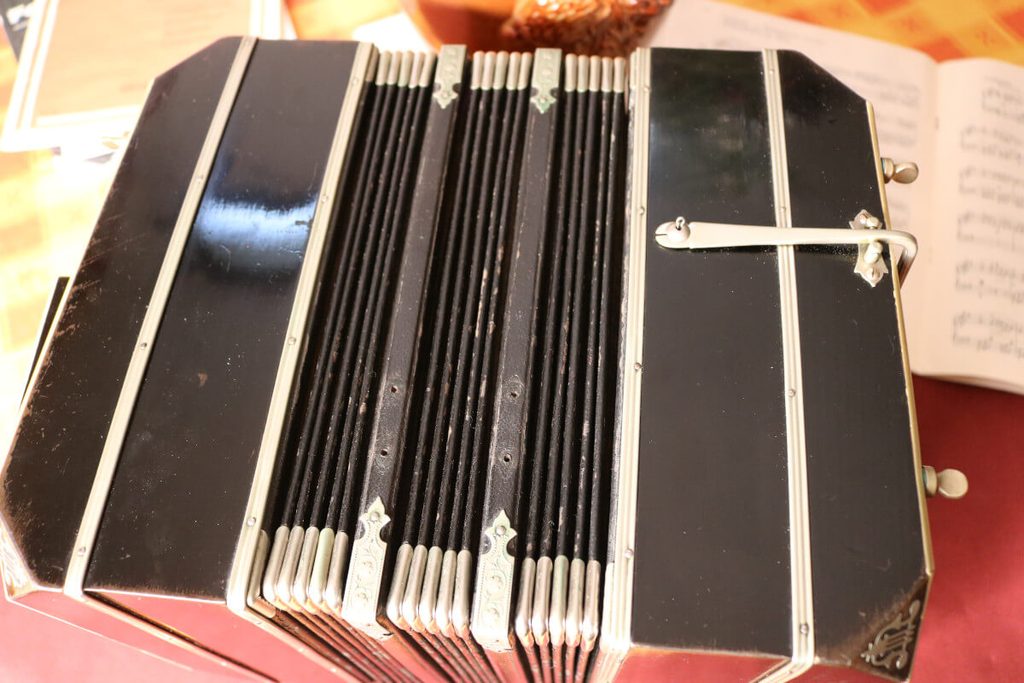
A 144 Einheits bandoneon with the voice of tango — zinc plates, octave tuning, fully restored and ready for its next player
Why I’m selling it
A couple of years ago I switched from the 144 Einheits system to the 142 Rheinische system, and since then this bandoneon has mostly sat quiet. So I’m selling it. It’s too good an instrument to stay in a case — I’d much rather it end up in the hands of someone who will actually play it, practice on it, and take it on stage. If that’s you, I’d love to hear from you.
The instrument
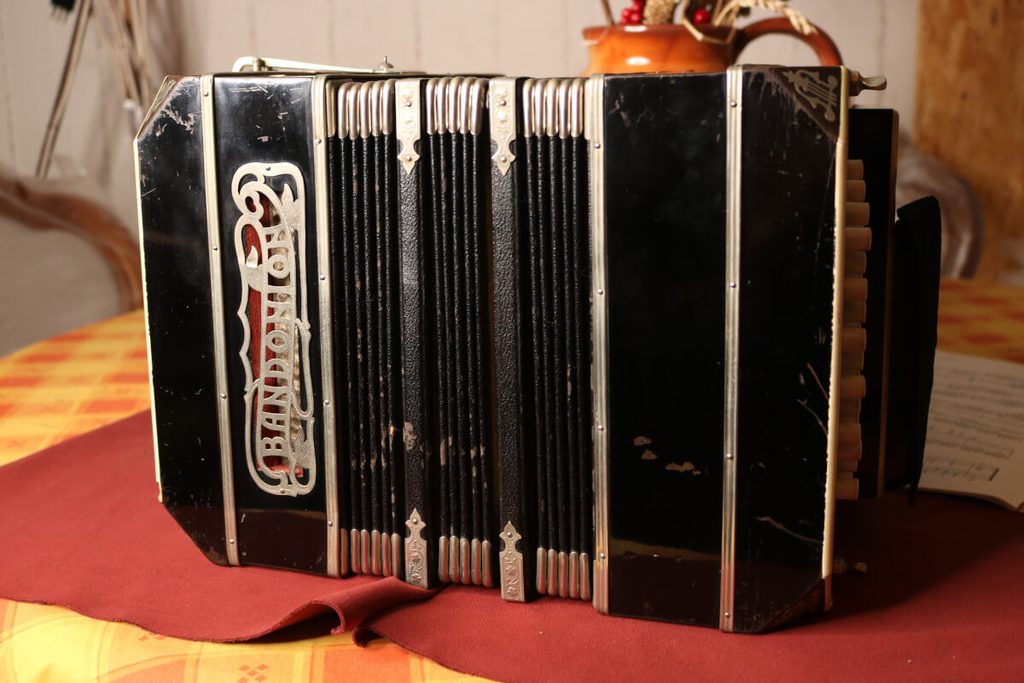
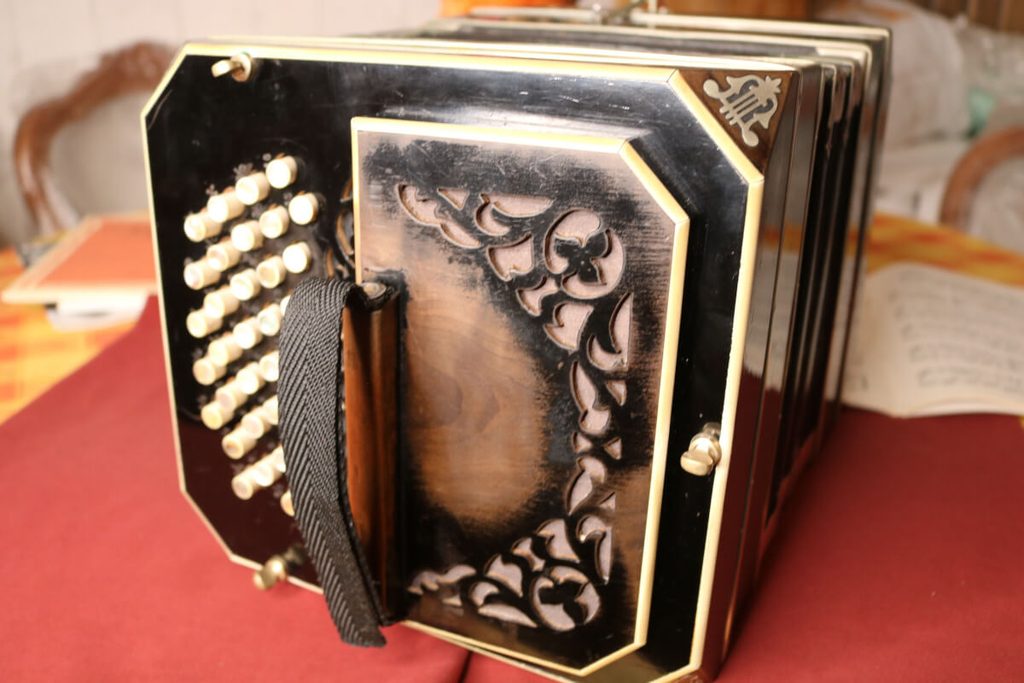
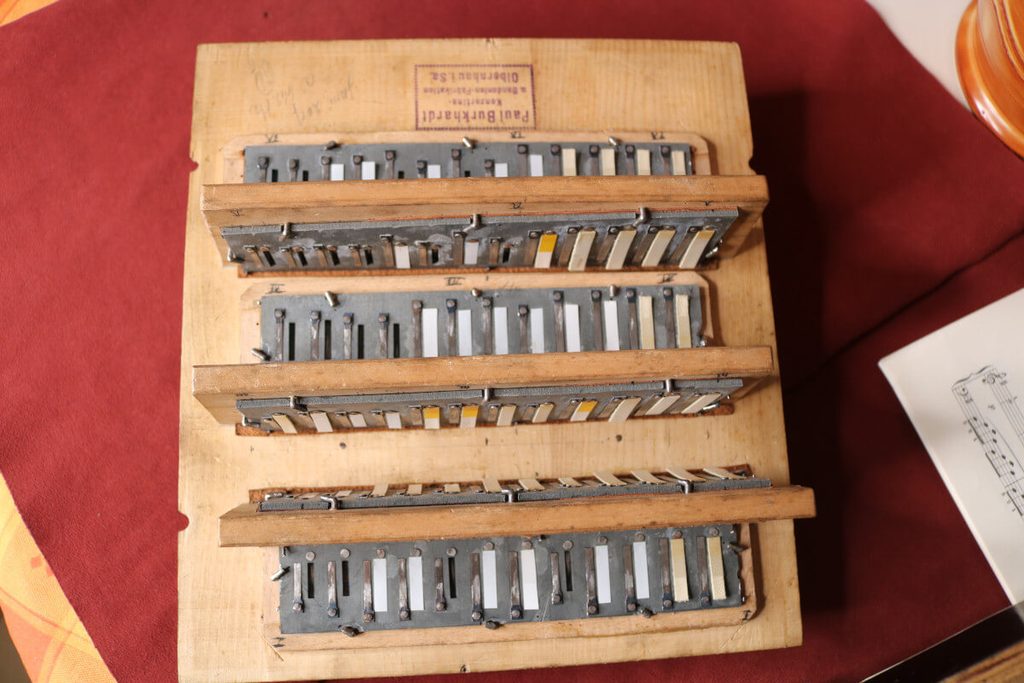
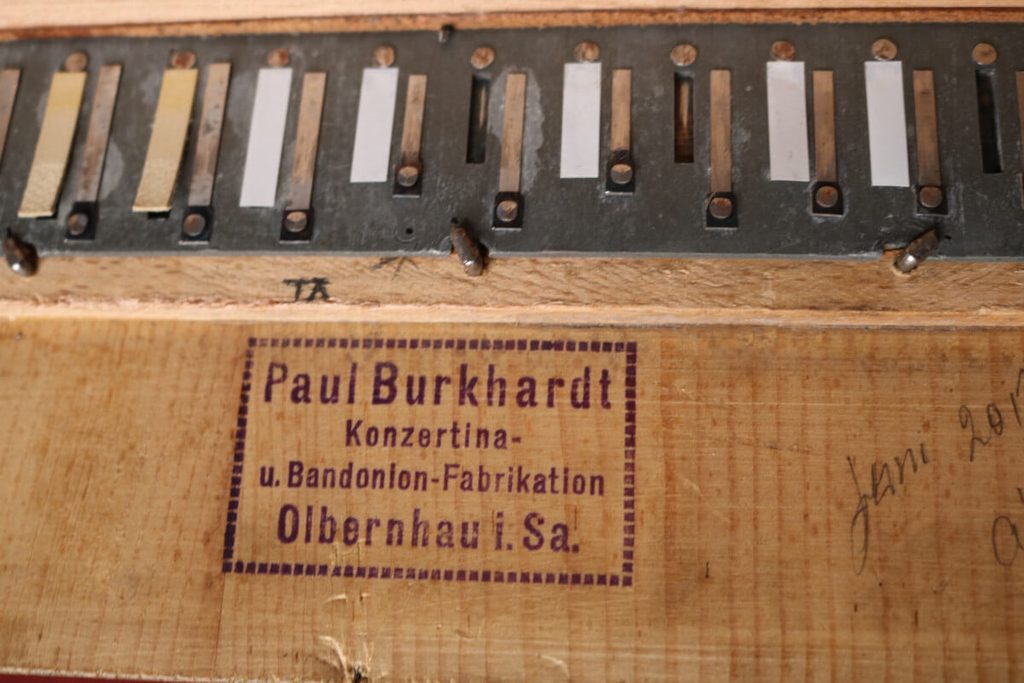
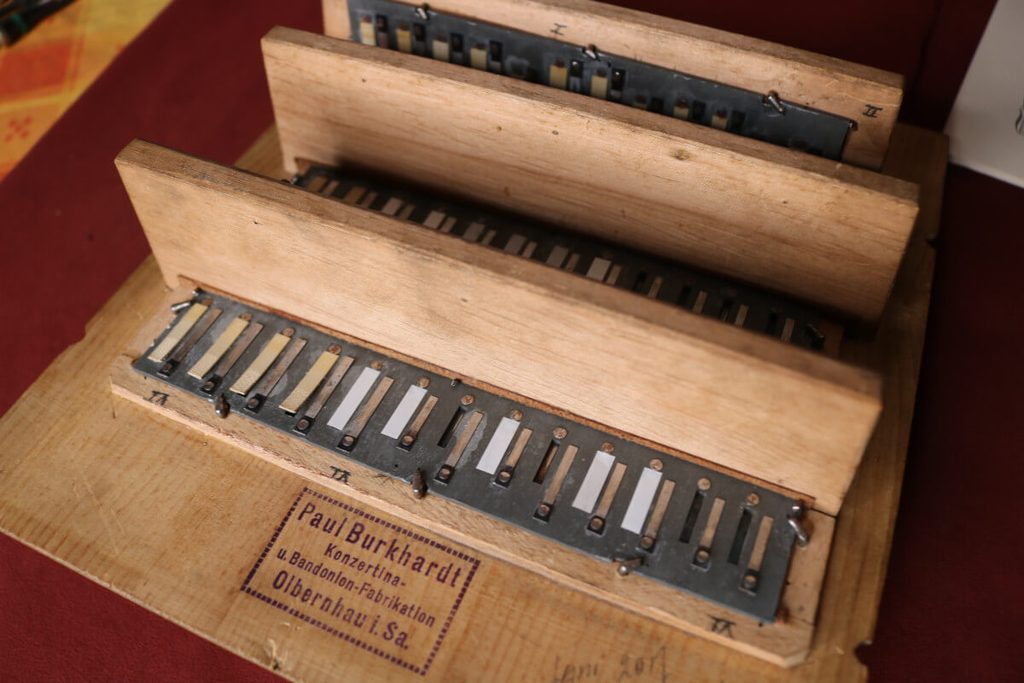
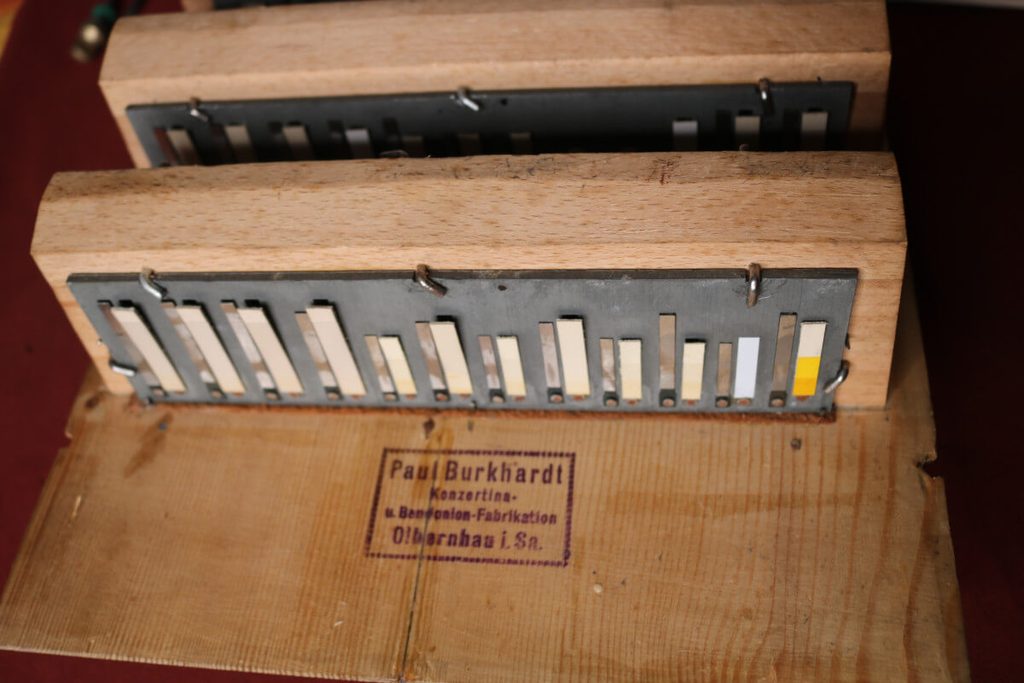
This bandoneon was built by Paul Burkhardt, most likely in 1925 or 1928 (possibly the early 1930s). I’ve never come across another instrument under this name — Burkhardt was almost certainly one of the many small bandoneon and concertina builders working in Saxony at the time. The stamp reads Olbernhau i. Sa., a town near the Czech border, not far from Chemnitz and Carlsfeld; “i. Sa.” simply means “in Sachsen” (in Saxony).
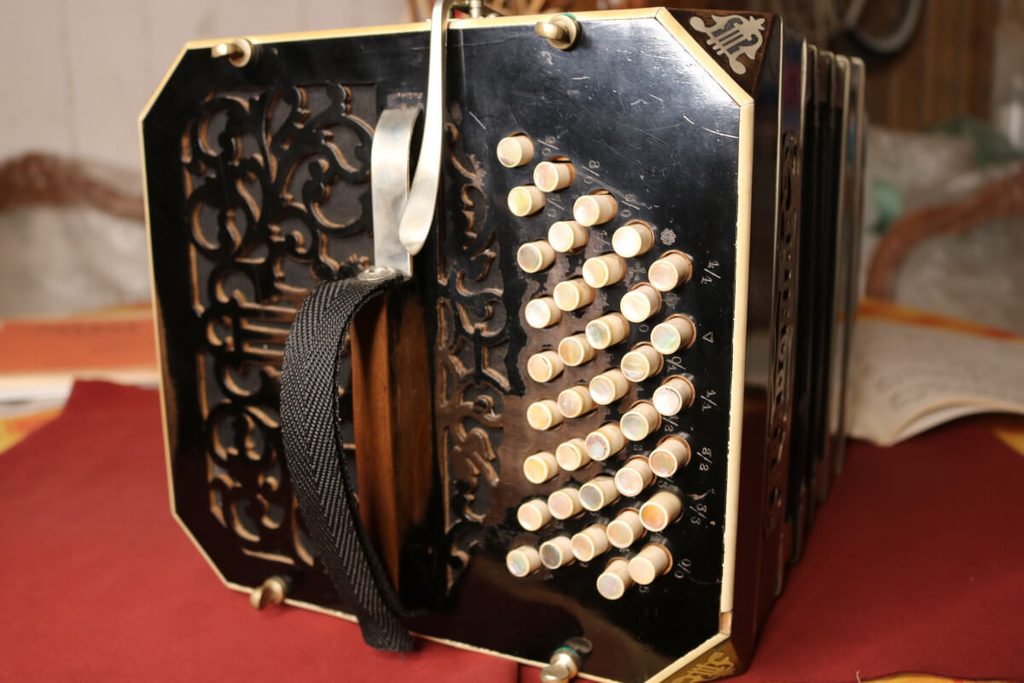
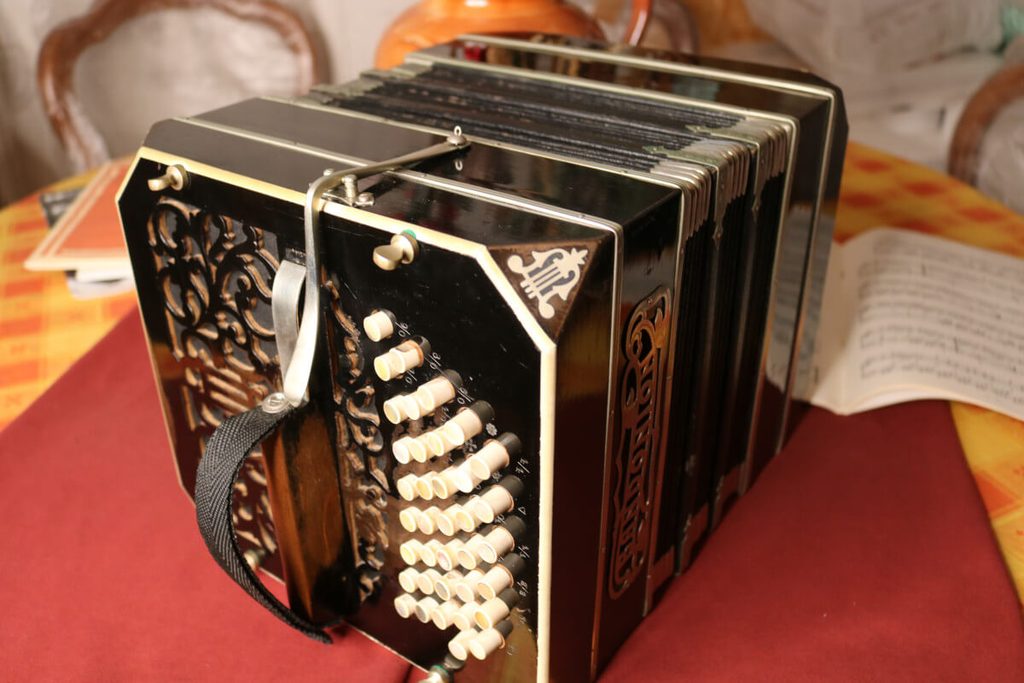
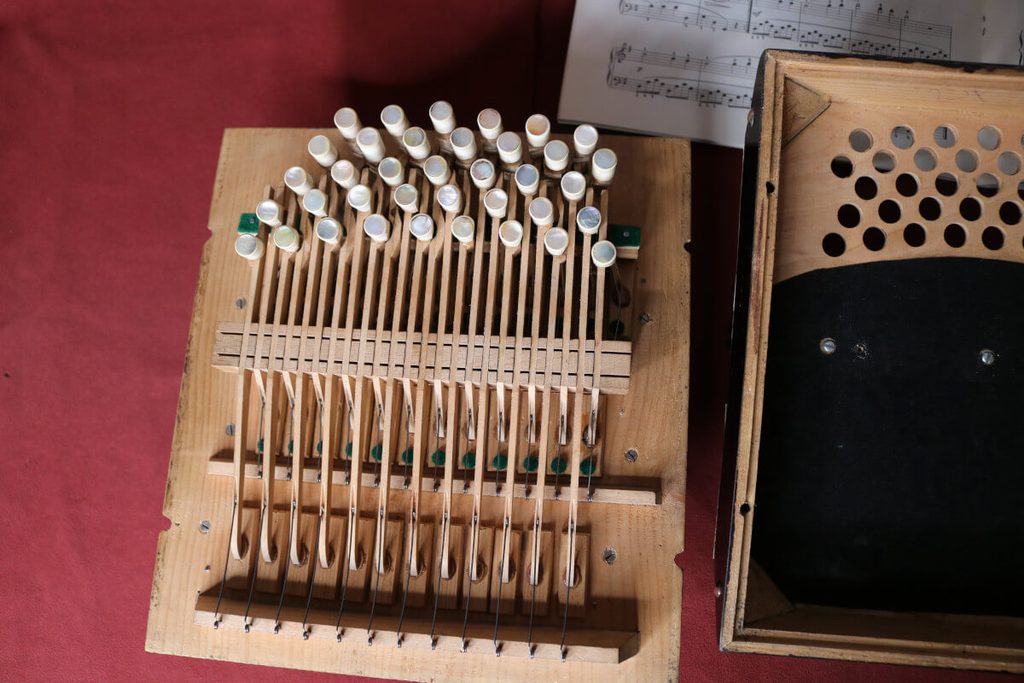
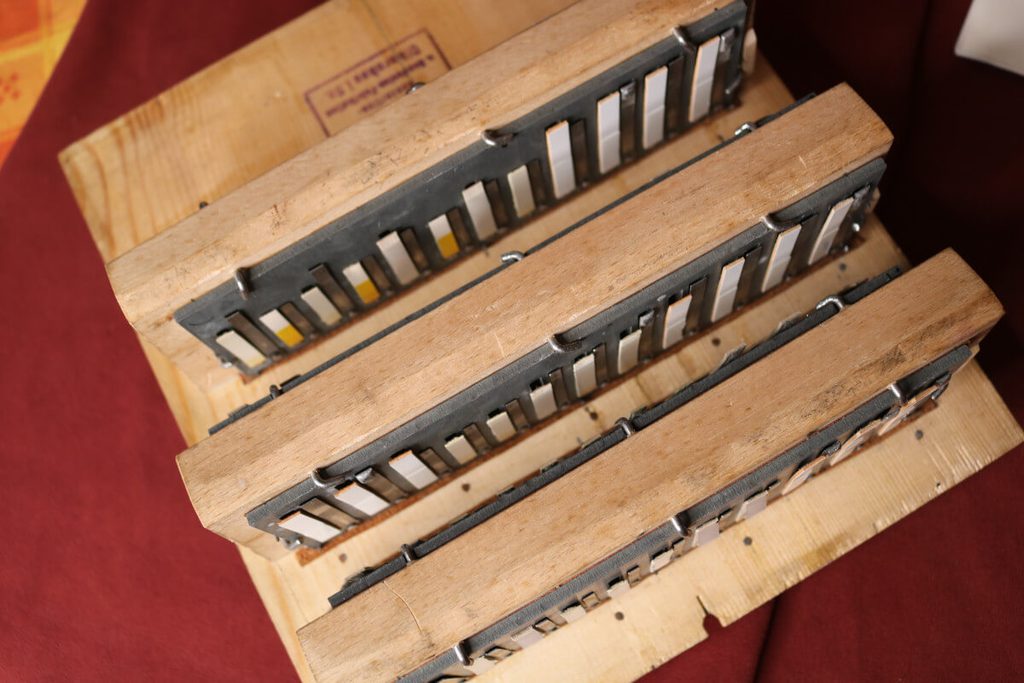
What makes it special is a combination you don’t often see: it’s a 144 Einheits system bandoneon, but built with zinc reed plates and octave tuning, instead of the aluminum plates and tremolo tuning that later became the norm for this system. The result is an instrument that sounds remarkably close to a classic tango bandoneon, even though it plays the Einheits layout. That might just be a matter of age — it predates the widespread use of aluminum in bandoneon-making — or it may have been built to order for a player who wanted the Einheits fingering with a tango sound. Either way, if you play the Einheits system, you’ll know how rare that combination is: most of us have had to accept aluminum plates and tremolo tuning as part of the deal. This instrument doesn’t ask for that compromise.
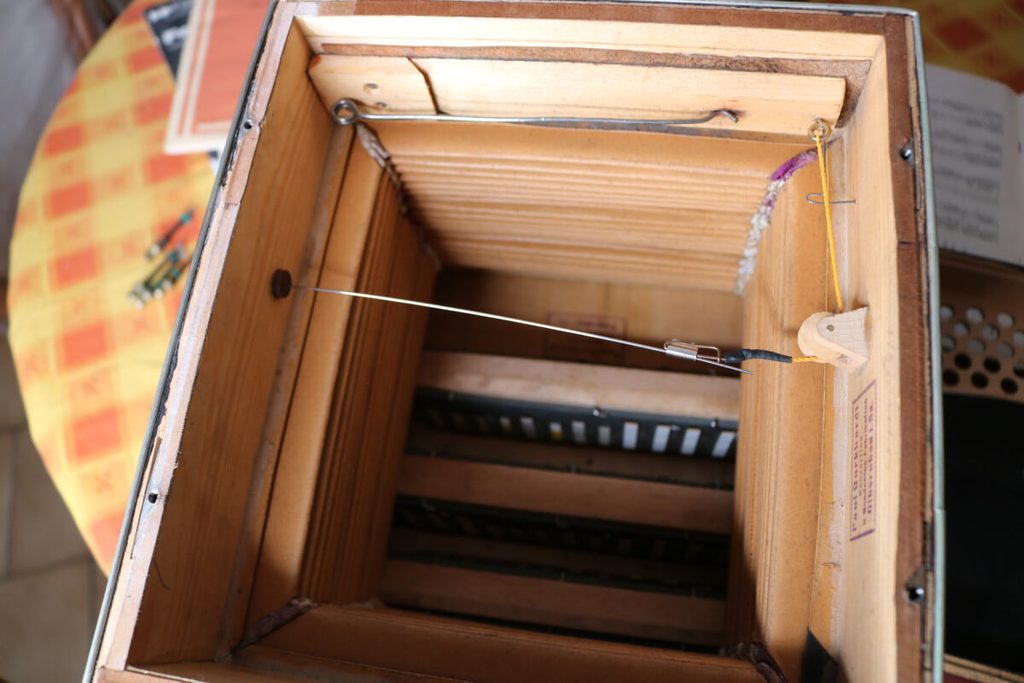
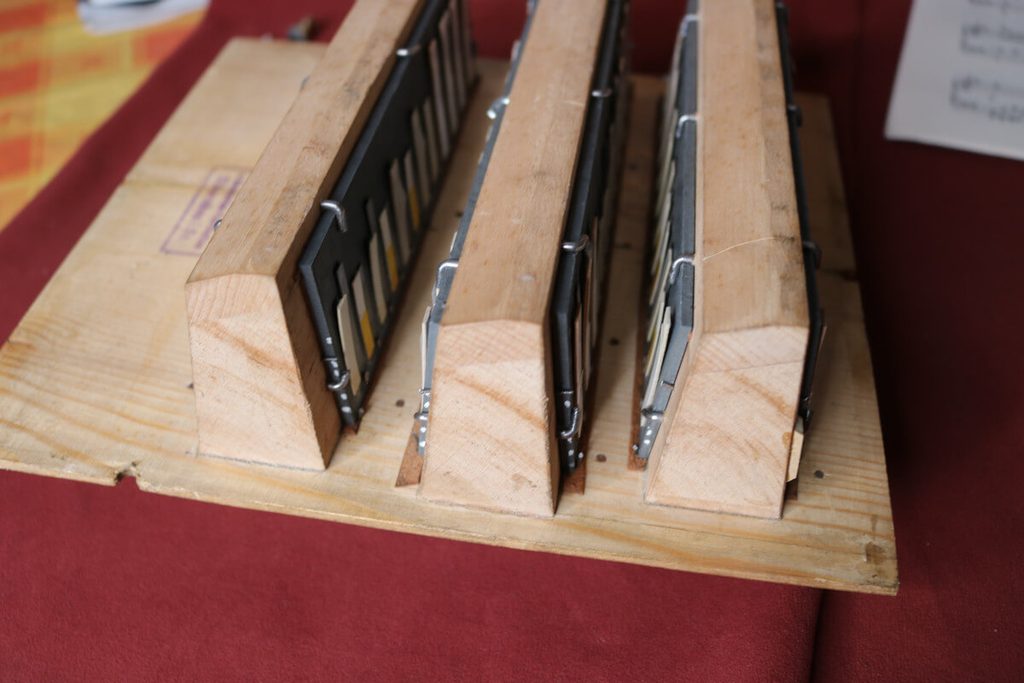
It also has a cassotto-style inlay, unusual on a bandoneon, probably requested by the original owner for extra power in the bass (the inlays were later closed with a wooden panel by the restorer), and front-mounted valves rather than the more common rear position — a detail typical of instruments from this era.
The instrument is in Italy at the moment.
Restoration history
This bandoneon has been looked after by a small chain of people I trust a great deal:
- 2017 — restored and tuned by Harry Geuns
- 2020 — re-tuned by Luciano Dujmovich (Argentina)
- 2023 — fitted with a brand-new bellows by Enrique Rial (Argentina)
- 2025 — inspected and checked over by Francesco Bruno (Italy)
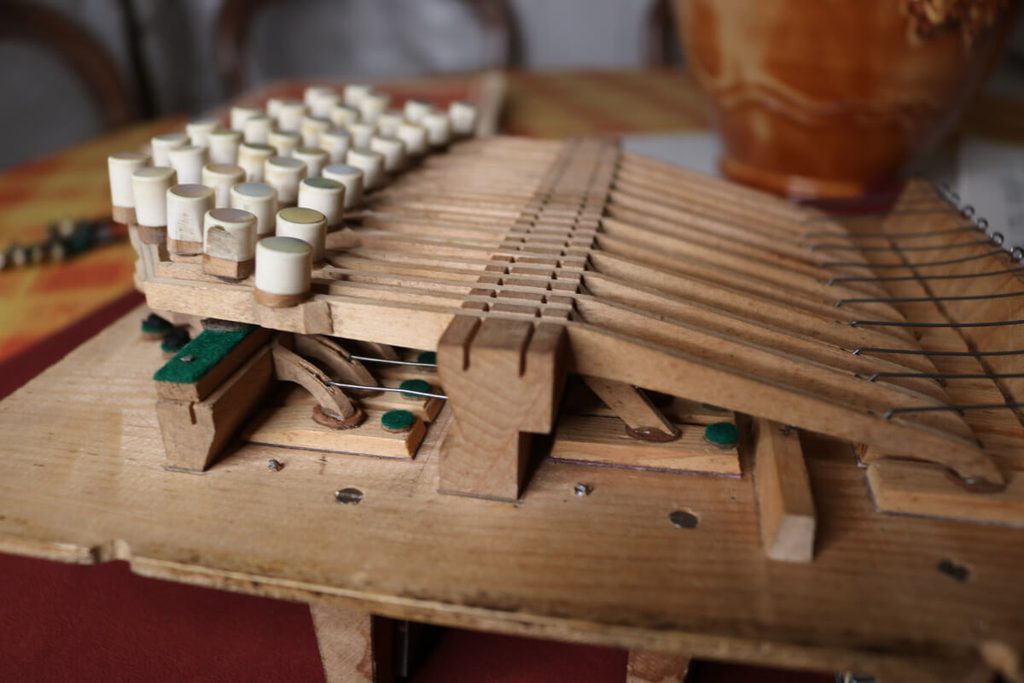
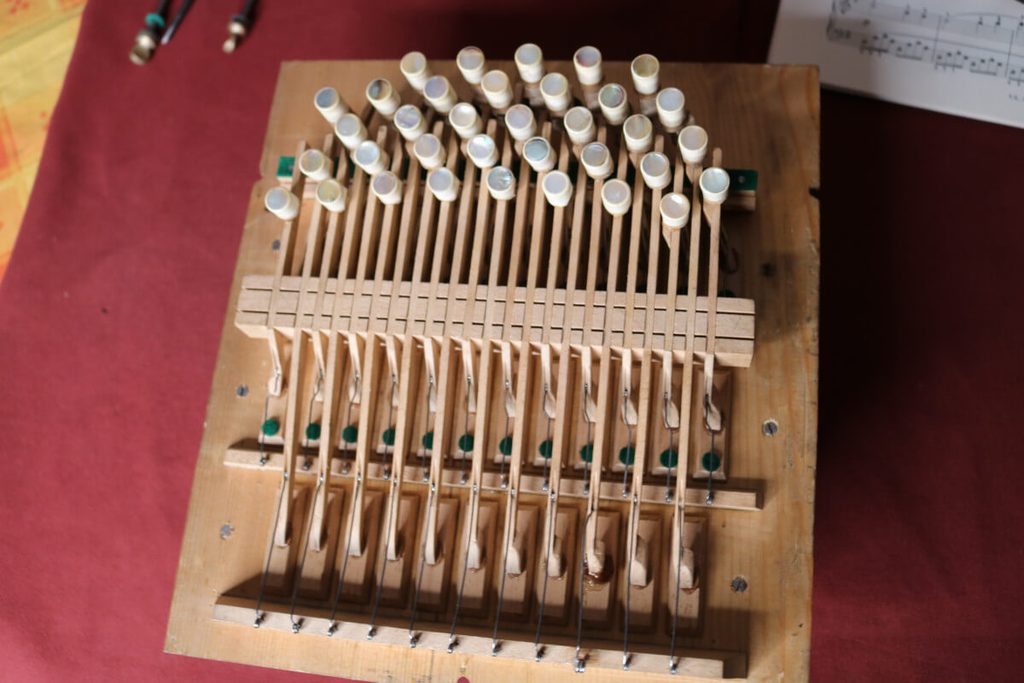
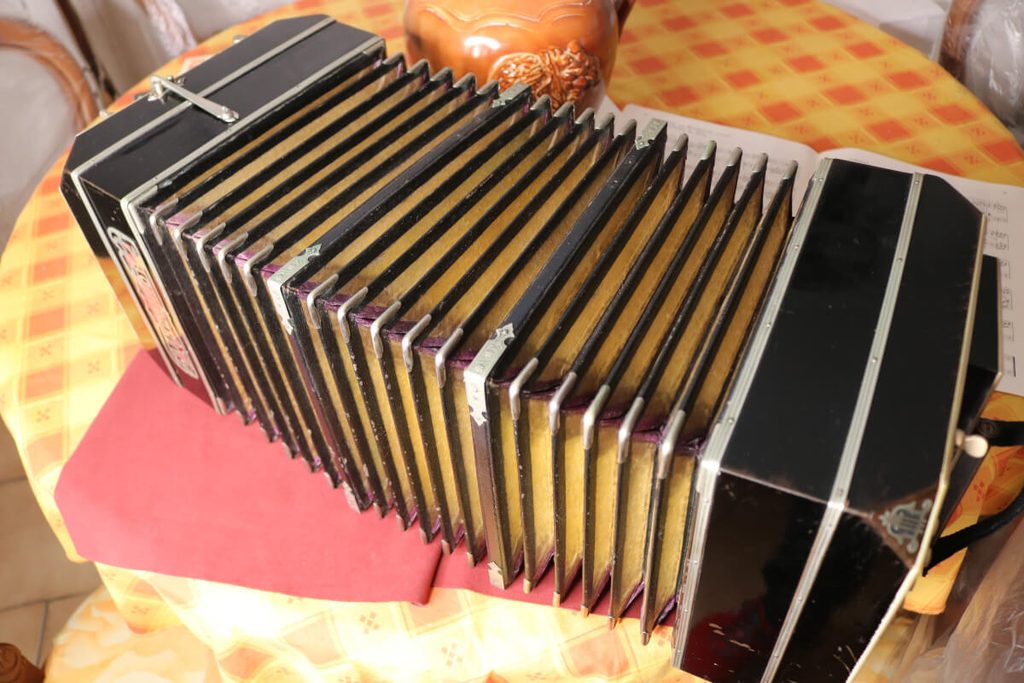
It’s in excellent condition and ready to play today. The photos here were taken before the bellows replacement.
Image Gallery
Videos
The last video was recorded after bellows replacement.
Price
€3,500
Interested? Get in touch
If you’d like more photos, a video or audio sample, or just want to ask a question, contact me providing the following information:
- Your name and surname
- Where are you writing from? (city / country)
- How would you like to pay? (e.g. bank transfer, PayPal, cash on pickup, other)
- Would you rather pick up the instrument in person, or have it shipped? (shipping costs are on the buyer)
- Anything else you’d like to tell me (your playing background, questions about the instrument, etc. — optional)
Or, just fill the form below 🙂